
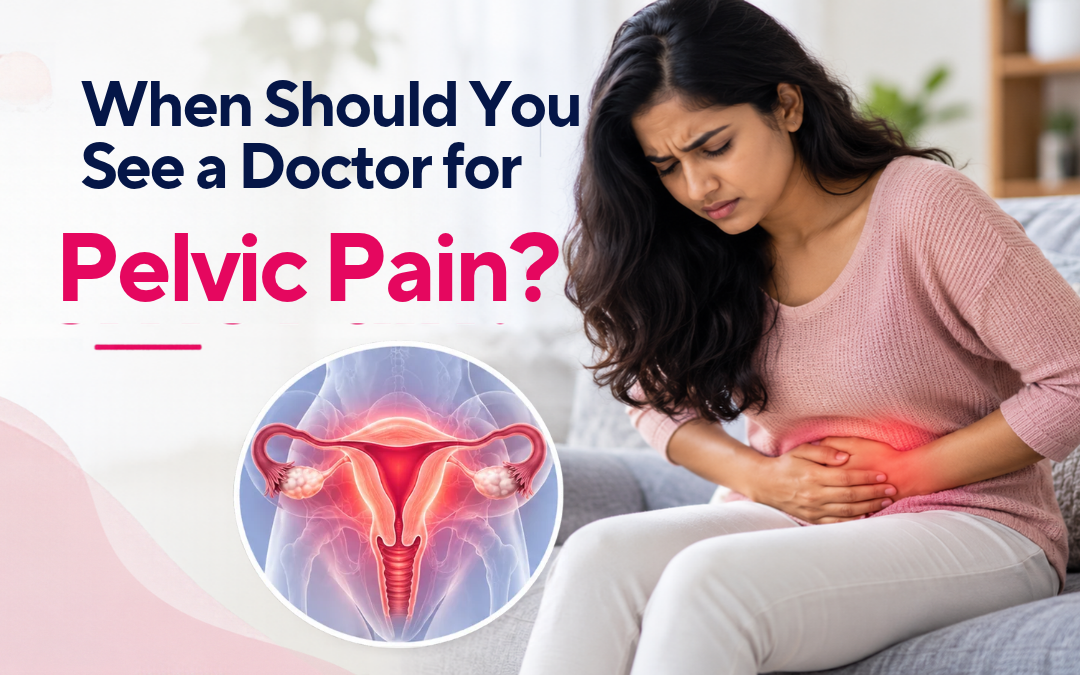
Quick Answer
Pelvic pain can occur for many reasons, including period-related cramps, ovarian cysts, endometriosis, fibroids, urinary problems, infections, or digestive conditions. Mild occasional discomfort may settle, but persistent, severe, recurrent, or unexplained pelvic pain should be evaluated. Sudden severe pain, especially with fainting, heavy bleeding, fever, or possible pregnancy, needs urgent medical attention.
What Is Pelvic Pain?
Pelvic pain is discomfort in the lower abdomen or pelvis.
It may be:
- Sharp
- Dull
- Cramping
- Burning
- Constant
- Intermittent
The location and pattern can provide clues about the possible cause.
Common Causes
Period cramps are a common cause.
Other possibilities include:
Ovarian cysts:
Some cysts cause no symptoms, while others can cause pressure or pain.
Endometriosis:
Can cause pelvic pain, particularly around periods, and may also cause pain during sex.
Fibroids:
May cause pelvic pressure, pain, or heavy periods.
Pelvic infections:
Can cause pelvic pain with discharge, fever, or pain during urination or sex.
Urinary and gastrointestinal conditions can also produce pain in the pelvic area.
When Should You See a Doctor?
Make an appointment if pelvic pain:
- Continues for several days
- Keeps returning
- Interferes with daily life
- Occurs outside your period
- Happens during sex
- Is associated with unusual discharge
- Occurs with abnormal bleeding
- Is accompanied by urinary symptoms
When Is It an Emergency?
Sudden severe pelvic pain should be assessed urgently.
Seek immediate medical care if pain is accompanied by:
- Fainting
- Severe dizziness
- Heavy vaginal bleeding
- Fever
- Repeated vomiting
- Severe weakness
- Possible pregnancy
Sudden severe pain during pregnancy can require urgent assessment.
How Is Pelvic Pain Diagnosed?
Your doctor may ask about your menstrual cycle, pregnancy possibility, sexual health, bowel and urinary symptoms, and previous medical conditions.
Depending on the findings, an ultrasound, blood tests, urine tests, or other investigations may be recommended.
FAQs
Can ovarian cysts cause pelvic pain?
Yes. Some ovarian cysts can cause pelvic discomfort or sudden pain.
Can period pain cause pelvic pain?
Yes. Menstrual cramps commonly cause lower abdominal or pelvic pain.
Should I ignore mild pelvic pain?
Occasional mild pain may settle, but persistent or recurrent pain should be evaluated.
Conclusion
Pelvic pain has many possible causes, and the severity and pattern matter. Persistent, recurrent, or sudden severe pain deserves proper medical assessment rather than repeated self-treatment.