Quick Answer
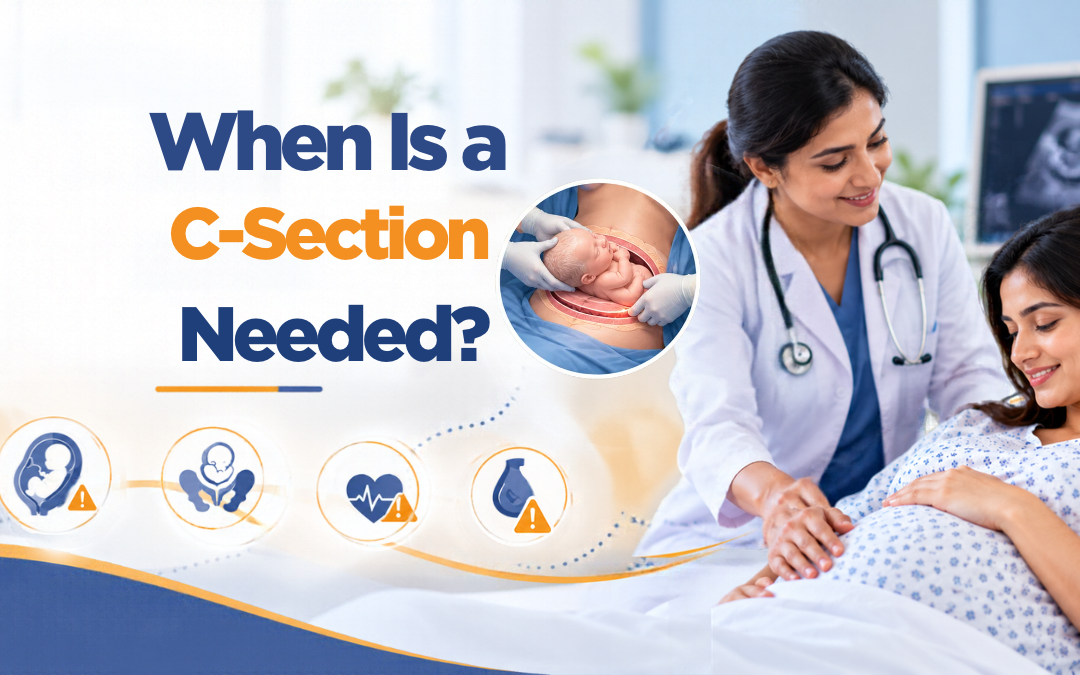
A C-section may be recommended when vaginal delivery could pose a significant risk to the mother or baby, or when labour does not progress safely. Reasons can include certain placenta problems, abnormal baby position, fetal distress, previous uterine surgery in some situations, or certain pregnancy complications. The decision is individualized and depends on the circumstances during pregnancy and labour.
What Is a C-Section?
A cesarean section, commonly called a C-section, is a surgical procedure used to deliver a baby through an incision in the abdomen and uterus.
It can be planned before labour or become necessary during labour if circumstances change.
Common Reasons for a C-Section
A C-section may be recommended when:
The baby is in an unusual position:
A breech or transverse position may make vaginal delivery unsuitable in certain circumstances.
There are concerns about the baby’s wellbeing:
Changes in the baby’s heart rate or other signs may indicate that delivery needs to happen sooner.
Labour is not progressing:
Sometimes the cervix does not dilate or the baby does not descend despite appropriate management.
Placenta problems:
Certain conditions involving the placenta can make vaginal delivery unsafe.
Certain maternal health conditions:
Some medical or pregnancy complications may make a C-section the safer option.
Does a Previous C-Section Always Mean Another C-Section?
No.
Some women who have had a previous C-section may be candidates for VBAC, or vaginal birth after cesarean.
However, suitability depends on factors such as the type of previous uterine incision, reason for the earlier C-section, current pregnancy, and available medical support.
Can a C-Section Be Planned?
Yes.
When there is a known reason why vaginal delivery may not be appropriate, a planned C-section may be scheduled.
In other cases, the decision is made during labour because of an unexpected complication.
Is C-Section Major Surgery?
Yes. A C-section is abdominal surgery, so recovery generally takes longer than recovery from an uncomplicated vaginal birth.
After surgery, the mother needs wound care, pain management, gradual movement, and follow-up.
FAQs
Is C-section safer than normal delivery?
The safest method depends on the mother’s and baby’s circumstances. A C-section can be lifesaving when vaginal delivery is unsafe.
Can I have a normal delivery after a C-section?
Some women may be suitable for VBAC, depending on individual factors.
Can a C-section be done without labour?
Yes. A planned C-section can be performed before labour begins when medically indicated.
Conclusion
A C-section is recommended when it is considered the safer way to deliver the baby based on the mother’s or baby’s condition. The decision should be individualized rather than based on a single factor.