Quick Answer
PCOS, or polycystic ovary syndrome, can affect ovulation and hormone levels. Common signs include irregular periods, acne, excess facial or body hair, weight changes, and difficulty becoming pregnant. However, symptoms vary widely, and having one or two of these symptoms does not confirm PCOS. A gynecologist may use medical history, examination, blood tests, and ultrasound when appropriate.
What Is PCOS?
PCOS is a common hormonal and reproductive condition that can affect women during their reproductive years.
It can affect ovulation and may be associated with increased androgen activity and metabolic changes.
Common Early Signs
The symptoms can differ from one woman to another.
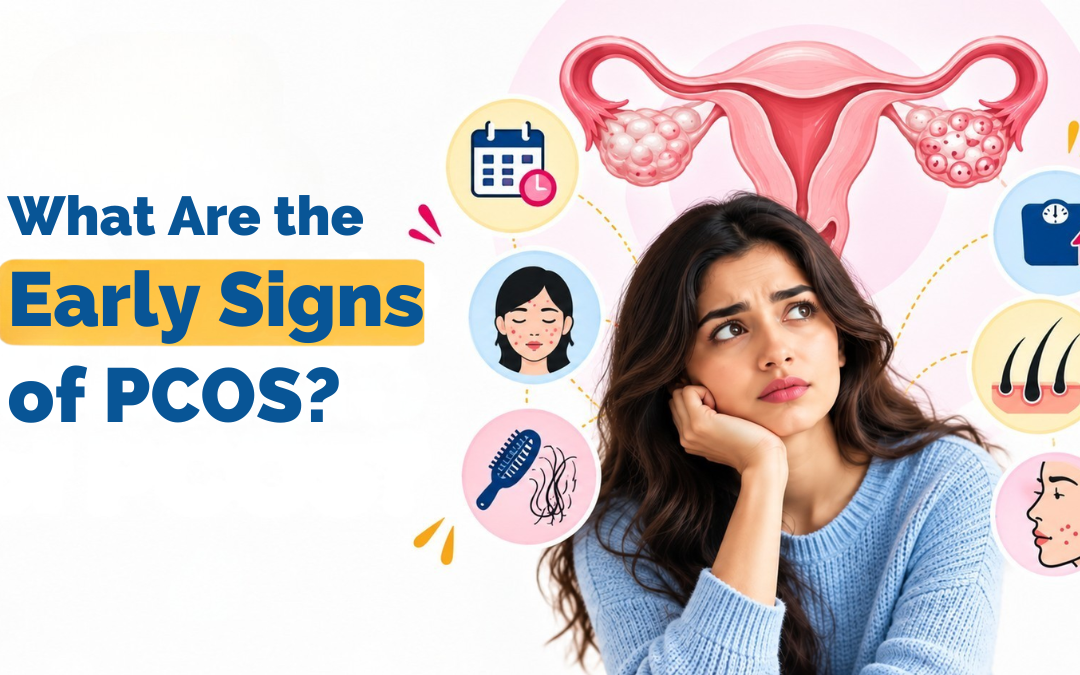
Common signs include:
Irregular periods:
Periods may occur less frequently or become unpredictable because ovulation may not happen regularly.
Excess facial or body hair:
Some women develop more noticeable hair growth on the face, chest, abdomen, or other areas.
Acne:
Hormonal changes can contribute to persistent or adult acne.
Hair thinning:
Some women notice thinning hair, particularly around the scalp.
Weight changes:
Some women with PCOS gain weight or find weight management difficult, although PCOS can also occur in women without weight problems.
Does PCOS Always Cause Ovarian Cysts?
No.
Despite the name, not every woman with PCOS has polycystic-appearing ovaries on an ultrasound.
The diagnosis is based on a combination of clinical features, medical history, and appropriate investigations.
Can PCOS Affect Fertility?
Yes.
Because PCOS can interfere with regular ovulation, it can make conception more difficult for some women.
However, PCOS does not mean that pregnancy is impossible. Many women with PCOS become pregnant with appropriate care.
How Is PCOS Diagnosed?
There is no single test that confirms PCOS in every woman.
A doctor may consider:
- Menstrual history
- Symptoms
- Physical examination
- Hormone-related blood tests
- Blood sugar or metabolic assessment
- Ultrasound when appropriate
Other conditions that can cause similar symptoms may need to be ruled out.
FAQs
Is irregular menstruation a sign of PCOS?
It can be, but irregular periods have many possible causes.
Can thin women have PCOS?
Yes. PCOS can occur in women of different body types.
Does PCOS go away permanently?
PCOS is generally a long-term condition, but symptoms can often be managed effectively.
Conclusion
Irregular periods, acne, excess hair growth, and ovulation problems can be signs of PCOS, but they are not enough to diagnose it on their own. If you notice a combination of these symptoms, an OBGYN evaluation can help.