Quick Answer
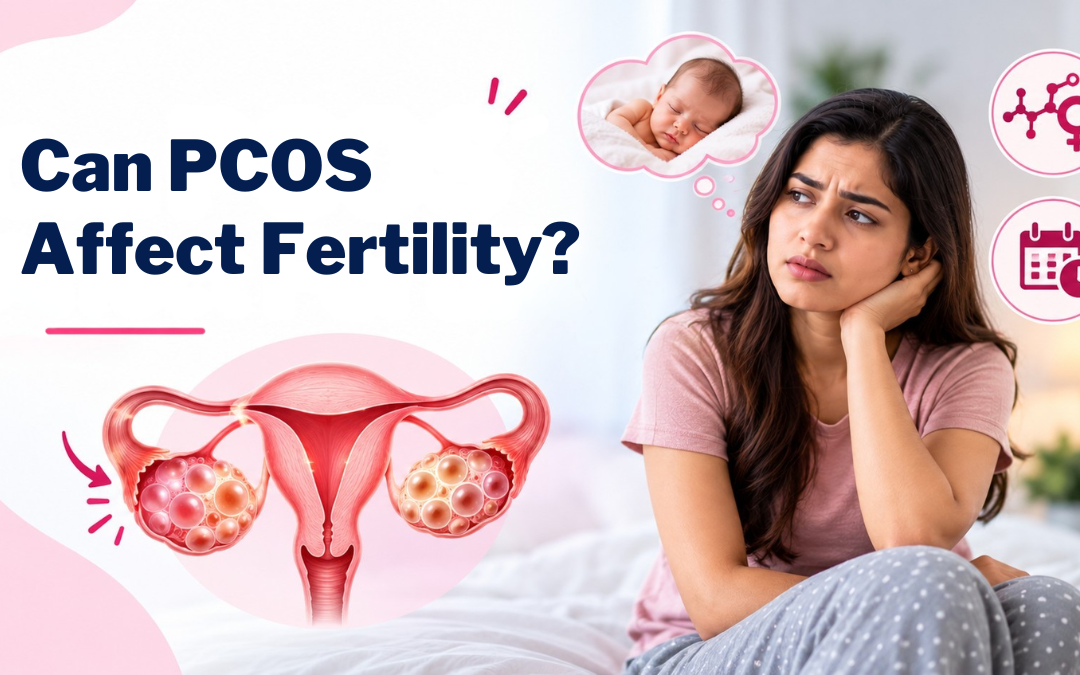
Yes. PCOS can affect fertility because hormonal changes may interfere with regular ovulation. However, having PCOS does not mean you cannot become pregnant. Many women with PCOS conceive naturally or with medical support. Treatment depends on factors such as ovulation, age, overall health, duration of trying to conceive, and whether other fertility factors are present.
How Does PCOS Affect Ovulation?
Ovulation is the release of an egg from the ovary.
For pregnancy to occur naturally, ovulation generally needs to happen regularly.
In PCOS, hormonal changes can interfere with the normal development and release of an egg. This may result in:
- Irregular periods
- Infrequent ovulation
- Unpredictable fertile days
- Difficulty timing intercourse
Some women with PCOS ovulate regularly, while others do not.
Does PCOS Mean Infertility?
No.
PCOS is one possible cause of difficulty conceiving, but it does not mean permanent infertility.
Many women with PCOS become pregnant after lifestyle changes, ovulation treatment, or other fertility support when needed.
What Can Help?
The treatment depends on the individual.
If weight management is appropriate, even modest weight changes may improve metabolic health and ovulation in some women with PCOS.
Regular physical activity and a balanced diet can also support overall health.
When pregnancy is desired, a doctor may recommend medication to help stimulate ovulation.
When Should You See a Doctor?
If you have PCOS and are trying to conceive, speaking with an OBGYN or fertility specialist can help.
You should also seek evaluation if:
- Periods are very irregular
- You rarely have periods
- You have been trying to conceive without success
- You have previous pelvic conditions
- Your partner may have fertility concerns
Fertility is influenced by both partners, so a complete assessment may sometimes be needed.
What Tests May Be Done?
Depending on the situation, evaluation may include:
- Ovulation assessment
- Hormonal blood tests
- Ultrasound
- Metabolic tests
- Assessment of the reproductive organs
Other fertility factors may also need to be considered.
FAQs
Can I get pregnant naturally with PCOS?
Yes. Some women with PCOS ovulate naturally and become pregnant without fertility treatment.
Does irregular ovulation mean pregnancy is impossible?
No. Treatment can sometimes help restore or support ovulation.
Does PCOS affect pregnancy after conception?
Some women with PCOS have increased risks of certain pregnancy complications, so appropriate antenatal monitoring is important.
Conclusion
PCOS can make pregnancy more difficult for some women because of irregular ovulation, but it does not mean pregnancy is impossible. If you are planning a pregnancy, early medical guidance can help identify the right approach.