
Quick Answer
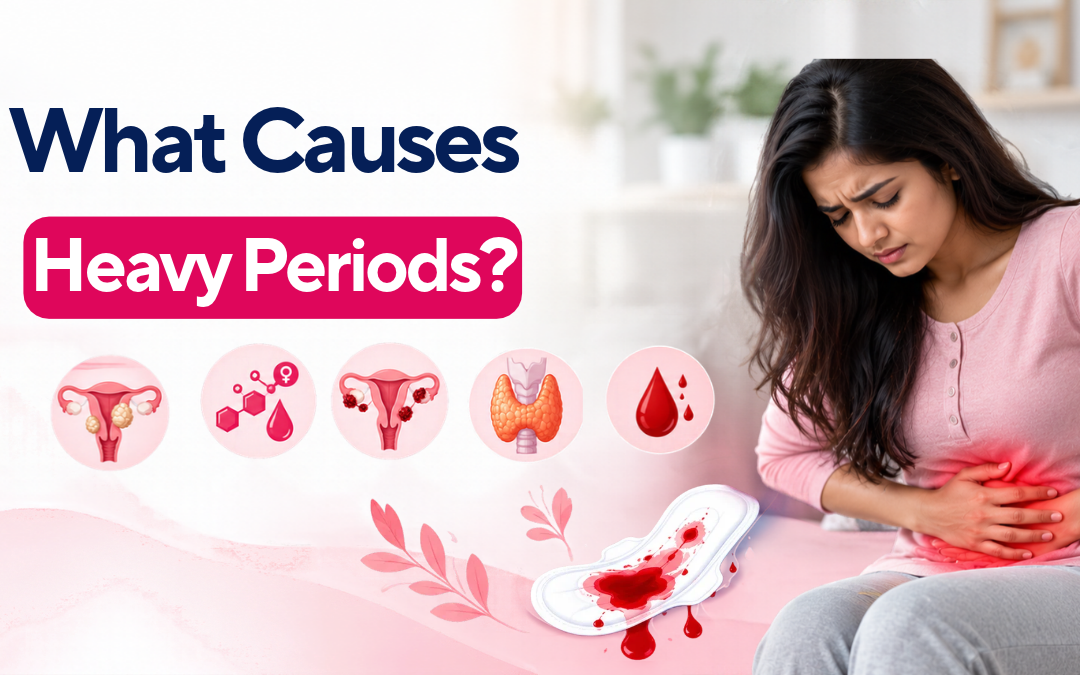
Heavy periods can happen for many reasons, including hormonal changes, fibroids, adenomyosis, endometriosis, thyroid problems, certain medications, bleeding disorders, and problems involving the uterus. Heavy menstrual bleeding can also lead to anemia and tiredness. If you regularly need to change pads or tampons very frequently, pass large clots, bleed for a long time, or feel weak and tired, consult a gynecologist.
What Counts as Heavy Periods?
Every woman’s menstrual flow is different.
Heavy bleeding may become noticeable when you need to change sanitary products unusually often, bleed for more than the usual number of days, pass large blood clots, or find that bleeding interferes with daily activities.
The overall pattern matters more than one unusually heavy period.
Common Causes
One common cause is hormonal imbalance.
If ovulation does not occur regularly, the uterine lining may build up and then shed heavily.
Other causes include:
Fibroids:
These are non-cancerous growths in the uterus and can cause heavy or prolonged periods.
Adenomyosis:
This condition can cause heavy bleeding along with painful periods.
Endometriosis:
It may cause pelvic pain and menstrual symptoms.
Thyroid problems:
Changes in thyroid function can affect menstrual cycles.
Some medicines and bleeding disorders can also contribute.
Can Heavy Periods Cause Anemia?
Yes.
Repeated heavy blood loss can reduce the body’s iron stores and may eventually lead to iron-deficiency anemia.
Symptoms may include:
- Tiredness
- Weakness
- Dizziness
- Headaches
- Shortness of breath
- Pale skin
If these symptoms occur with heavy bleeding, medical evaluation is important.
When Should You See a Gynecologist?
See a doctor if heavy periods are:
- Repeated
- Getting worse
- Lasting unusually long
- Affecting your daily activities
- Associated with severe pain
- Causing tiredness or weakness
- Occurring between periods
Very heavy bleeding accompanied by fainting, severe weakness, or other concerning symptoms may require urgent medical attention.
How Is the Cause Found?
Your doctor may ask about your cycle and bleeding pattern.
Depending on your symptoms, evaluation may include blood tests, pregnancy testing, thyroid testing, pelvic ultrasound, or other investigations.
Treatment depends on the cause and may include medication or treatment of an underlying condition.
FAQs
Can fibroids cause heavy periods?
Yes. Fibroids can cause heavy or prolonged menstrual bleeding.
Can heavy periods cause low hemoglobin?
Repeated blood loss can contribute to iron-deficiency anemia.
Are heavy periods normal after puberty?
Menstrual patterns can vary, but persistent or very heavy bleeding should be evaluated.
Conclusion
Heavy periods are common but should not always be considered normal. If bleeding is affecting your daily life or causing tiredness and weakness, identifying the cause can help you receive appropriate treatment.